
Summer Hiking in Acadia National Park: Why It Hits Different When Done Right
There’s a version of Acadia National Park that most people experience in the summer, and then there’s the version that opens up when you understand how to move through it. By mid-season, Mount Desert Island is fully active. Trails are dry, carriage roads carry steady movement from early morning, and the coastline moves at a rhythm that builds from sunrise into the evening. It’s one of the most recognizable outdoor environments in the country, but that visibility comes with a tradeoff. Without intention, the experience can quickly become defined by timing, crowds, and logistics rather than the landscape itself.
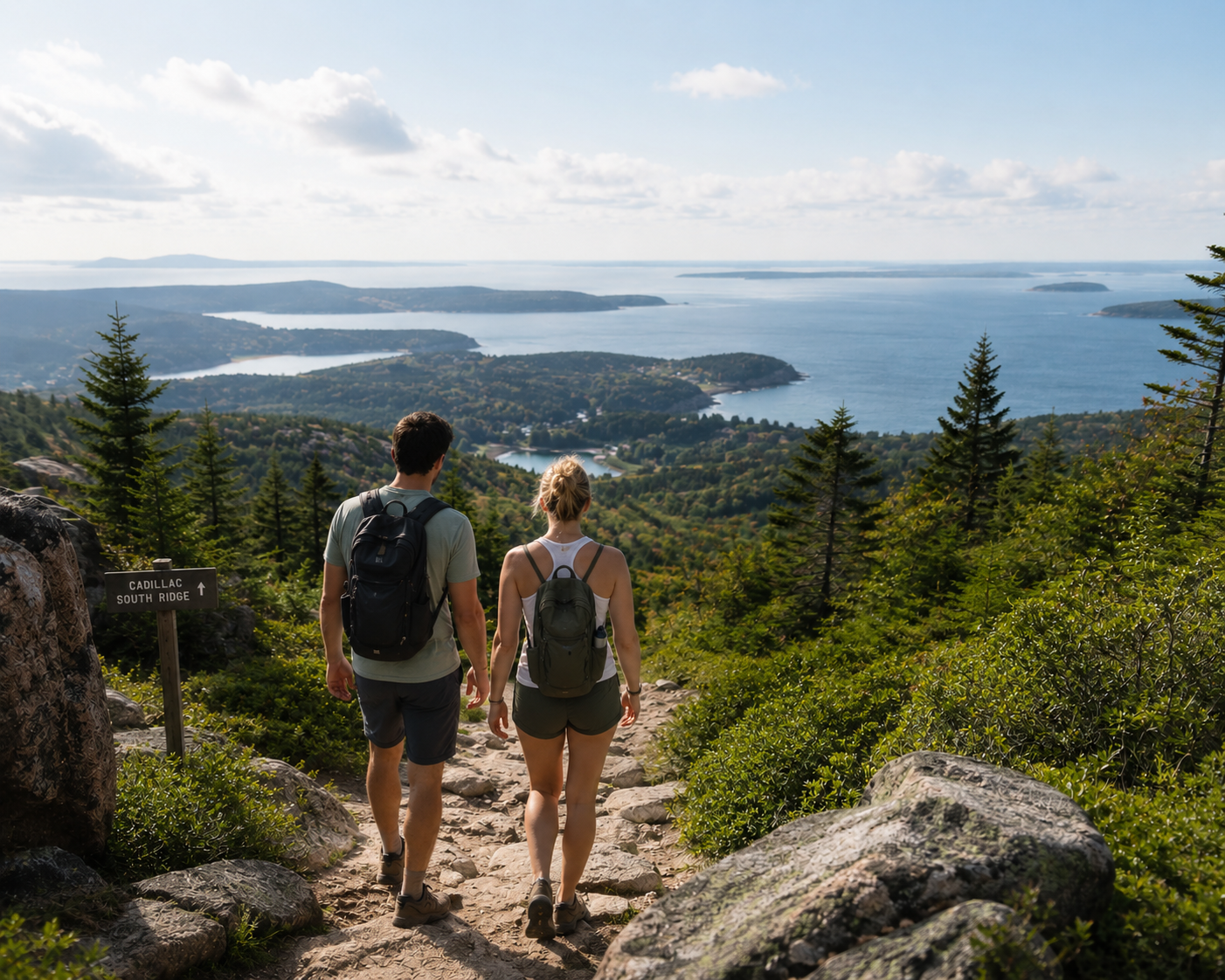
For anyone approaching Acadia National Park hiking, the difference isn’t just where you go. It’s how you structure the day around it. What makes summer hiking in Acadia National Park feel different isn’t just the trails themselves, but how the entire environment moves once conditions are fully open.
Note: The experiences and examples shared here are intended for general lifestyle and educational purposes only. They are not medical advice, recommendations, or guidance. Cannabis affects everyone differently, and individuals should make personal, informed decisions based on their own experience, tolerance, and local regulations.
Why Acadia Feels Different in the Summer
Acadia in the summer operates on momentum. Conditions are ideal, which means access is high, and with that comes volume. Parking fills early, popular routes carry steady traffic, and timing becomes part of the experience whether you plan for it or not. For many, this shapes their understanding of things to do in Acadia Maine, or more broadly, things to do in Acadia National Park, focusing on well-known trails and trying to fit multiple stops into a single day.
The park itself hasn’t changed. The way people move through it has.
That’s where the opportunity is. The goal isn’t to avoid the activity, but to move differently within it. With the right structure, the same environment can feel open and continuous rather than compressed.
Building the Day Before You Get There
In Acadia, timing is structure. Starting early doesn’t just mean fewer people, it changes how the entire day unfolds. Trails feel more continuous, movement is less interrupted, and there’s room to build momentum rather than react to it. That approach mirrors what we’ve explored in A Day in Motion: How Active Mainers Integrate Cannabis From Sunrise to Recovery, where the focus shifts from isolated efforts to how a full day connects.
Once that flow is established, the experience becomes less about checking off locations and more about letting the day extend naturally. A hike can begin on routes like the Jordan Pond Path, move toward the carriage roads, and eventually carry into time along the coastline without a hard reset. The difference is subtle, but it changes how the day feels from start to finish.
Rethinking What “Doing Acadia Right” Means
For active adults, doing Acadia right isn’t about covering the most ground. It’s about understanding how effort, timing, and environment work together. That often means choosing fewer routes and spending more time within them, allowing for longer stretches on the trail and a pace that matches the terrain rather than pushing against it.
This is where many hiking Acadia tips fall short. They tend to focus on logistics rather than experience. Where to go, when to arrive, what to see. Those things matter, but they don’t define the day. The real shift comes from how you approach it. That perspective aligns with what we’ve outlined in Inside the Maine Mindset: Why “Better, Not More” Guides Everything We Do, where the emphasis is on better, not more. In a place like Acadia National Park, that difference becomes clear quickly.
Managing Energy Across a Full Day
One of the most common challenges in Acadia isn’t access. It’s pacing. The environment invites movement, and once you’re in it, it’s easy to extend effort further than planned. Trails connect to coastline, coastline leads into town, and the day can carry longer than expected without clear stopping points.
This is where consistency matters more than intensity. Hydration becomes a baseline rather than something you address later, especially during warmer days when time on exposed sections increases. For some, that simply becomes part of preparation, whether that’s maintaining steady hydration with HiiStix + Electrolytes or keeping things minimal with HiiStix Unflavored when you don’t want to overcomplicate it.
The goal isn’t to push further. It’s to make sure the day holds.
Moving Responsibly in a Shared Environment
Acadia in the summer is a shared space. Families, groups, and solo visitors all move through the same trails and carriage roads, often at different paces. As the day progresses, that mix becomes more pronounced, and how you move within it matters just as much as where you go.
For those spending time with others, whether as part of a family trip or a weekend getaway, that often means adjusting expectations and choosing routes that allow for both movement and flexibility. It also means being mindful about how decisions carry through the rest of the day. In environments like this, discretion and responsibility matter. That includes avoiding situations where focus or awareness is reduced, and being intentional about timing, particularly when driving or navigating busy areas within the park.
When it comes to personal routines, simplicity tends to be the most effective approach. Options like Capsules can support consistency, but they should always be approached with awareness of environment, local regulations, and the responsibility that comes with being in a shared outdoor setting.
Letting the Environment Set the Pace
The most consistent experiences in Acadia come from working with the environment rather than against it. That might mean adjusting timing to avoid peak movement, choosing routes based on current conditions, or allowing space within the day for things to unfold naturally.
As we explored in Mud Season to Trail Season, conditions in Maine shape behavior. In Acadia, that remains true even at peak season. The difference is that the constraints shift from terrain to timing. Once you recognize that, the experience becomes more fluid, even in a high-traffic environment.
Final Thought
Acadia in the summer doesn’t need to be rushed to be experienced fully. The difference isn’t in how much you do, but in how you move through it. When the day is structured with intention, when effort is paced rather than stacked, and when the environment is allowed to guide rather than dictate, the experience shifts.
What might otherwise feel crowded becomes something more open and connected. And in a place like Acadia, when it’s approached that way, it hits different.
